

Bitumen packaging is more than simply a way to move the product from the supplier to the project site. The packaging format can directly influence handling, storage, transportation, heating, contamination risk and overall project efficiency. Poorly suited packaging may increase handling time, complicate heating or create unnecessary storage challenges, while the right option can make site operations smoother and more efficient.
For most projects, the choice comes down to two common approaches: drum-packed bitumen and bulk bitumen. Each offers practical advantages depending on the required quantity, storage facilities, transportation arrangements and site conditions.
This guide explores the key differences between the two options and explains how to choose the right bitumen packaging for your project, helping you balance convenience, cost, handling requirements and operational efficiency.
Why Does Bitumen Packaging Matter for Construction Projects?
Bitumen is a temperature-sensitive material that requires appropriate handling throughout its journey from supplier to project site. Effective bitumen packaging helps protect the product during transportation and storage while making it easier for contractors to handle the material according to their operational requirements.
Packaging can influence several aspects of a project, including:
- Transportation and loading requirements
- Storage conditions
- Material handling
- Heating procedures
- Risk of contamination
- Labour requirements
- Equipment availability
- Project costs
- Delivery flexibility
- Overall site efficiency
For example, a small contractor working on a road maintenance project may not have the infrastructure required to receive and store large quantities of bulk bitumen. Drum-packed material may therefore be more practical.
On the other hand, a large asphalt plant consuming substantial quantities of bitumen every day may benefit from bulk supply because it can reduce repeated handling and improve material flow into its production system.
The right option ultimately depends on how bitumen will be received, stored, heated, transported internally, and used at the project site.
What Is Bitumen Drum Packing?
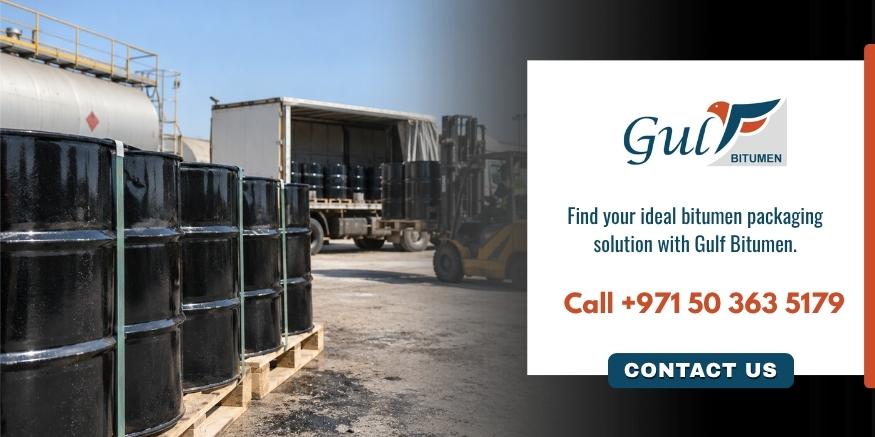
Bitumen drum packing involves filling bitumen into specially manufactured metal drums for transportation and storage. The drums provide a practical way to transport predetermined quantities of bitumen while allowing suppliers and contractors to handle individual units.
Drum-packed bitumen is commonly used where the buyer requires greater flexibility in transportation or does not have dedicated bulk bitumen storage infrastructure.
The drums can be loaded onto trucks, containers, or other suitable transportation systems and delivered directly to construction sites, asphalt facilities, waterproofing projects, and other locations.
One of the main advantages is convenience. Instead of requiring a dedicated tanker or bulk storage system, contractors can receive bitumen in manageable units.
How Should You Choose Between Drums and Bulk Bitumen?
A simple way to make the decision is to evaluate five questions:
- How much bitumen do you need?
Smaller requirements may favour drums, while high-volume consumption can favour bulk supply. - How often will you use it?
Intermittent consumption can make drum packaging more flexible. Continuous consumption may favour bulk delivery. - What infrastructure is available?
If you already have heated tanks and transfer equipment, bulk may be easier to manage. - Where will the material be used?
Multiple or remote project locations may benefit from the flexibility of drums. - What does your project specification require?
The selected grade, including penetration grade bitumen where specified, must meet the technical requirements of the project.
By answering these questions, buyers can identify the packaging method that best fits their operational needs.
When Should You Choose Bitumen Drum Packing?
Drum packaging can be a practical choice when flexibility is more important than high-volume automated handling.
Consider bitumen drum packing if your project has one or more of the following requirements.
1. Your Project Uses Smaller Quantities
If your project does not consume enough bitumen to justify a bulk storage system, drums can provide a more practical solution.
Instead of investing in tanks and associated infrastructure, contractors can purchase quantities according to their requirements.
This can be particularly useful for smaller road maintenance projects, repair works, waterproofing applications, and specialised construction activities.
2. You Are Working Across Multiple Locations
Projects involving several construction sites can benefit from the portability of drum-packed bitumen.
For example, road maintenance contractors may need material at different locations across Dubai, Abu Dhabi, Sharjah, or other parts of the UAE. Drums can be transported according to individual site requirements rather than transferring large quantities into separate storage systems.
3. Your Site Has Limited Infrastructure
Bulk bitumen requires suitable receiving and storage arrangements.
If a project site does not have a dedicated heated tank, pumping equipment, and suitable transfer systems, drum packaging may be easier to implement.
This can help contractors avoid unnecessary infrastructure investment for short-duration projects.
4. You Need Greater Delivery Flexibility
Drums can make it easier to order and transport specific quantities.
This can be useful when material requirements change during the project or when bitumen consumption is not consistent from one day to another.
How Does the Bitumen Grade Affect Your Packaging Decision?
Packaging is only one part of the purchasing decision. The bitumen grade must also match the intended application.
One commonly specified category is penetration grade bitumen.
Penetration grades are classified according to the penetration value of the bitumen, which indicates its consistency under specified testing conditions. Different grades can be selected according to climate, pavement requirements, project specifications, and intended use.
For example, road construction projects may specify a particular penetration grade based on engineering requirements and local conditions.
The selected grade should always be confirmed against the project’s technical specifications rather than choosing a grade based solely on packaging format.
In other words, choosing between drums and bulk does not replace the need to select the correct bitumen grade.
What Should UAE Buyers Consider Before Choosing Bitumen Packaging?
The UAE’s construction environment presents several factors that buyers should consider when planning bitumen supply.
Climate and Temperature
High ambient temperatures can influence storage and handling requirements. Bitumen must be stored and handled under conditions appropriate for its grade and intended application.
Proper storage planning is therefore essential regardless of whether the material arrives in drums or in bulk.
Transportation Distance
The distance between the supplier, storage facility, and project site can influence which delivery method is practical.
Projects spread across different emirates may have different logistics requirements from a fixed asphalt plant receiving regular bulk deliveries.
Available Heating Equipment
Bitumen often needs controlled heating before application or processing. Buyers should consider whether the project has suitable equipment for handling the selected product.
Drum-packed material and bulk material may require different site procedures, so heating capability should be considered before placing an order.
Storage Capacity
Ask how much material the project can safely and practically store.
A large asphalt plant may already have dedicated heated tanks, while a smaller contractor may only have space for a limited number of drums.
Storage capacity should be aligned with expected consumption and delivery schedules.
Project Duration
Short-term projects may benefit from flexible drum deliveries, particularly when consumption is limited.
Long-term projects with predictable, high-volume demand may be better suited to bulk supply.
How Can You Reduce Handling and Storage Challenges?
Good planning can make either packaging method more efficient.
For drum-packed bitumen, contractors should establish a suitable storage area and organise drums so that material can be accessed safely and efficiently.
For bulk bitumen, the receiving facility should ensure that storage tanks, heating systems, transfer lines, pumps, and related equipment are appropriate for the material being supplied.
In both cases, buyers should maintain clear inventory records.
Running out of bitumen during an active road or asphalt project can create unnecessary delays. At the same time, ordering significantly more material than required can increase storage and handling challenges.
A supply schedule based on actual project consumption can help maintain a better balance.
Why Working With the Right Bitumen Supplier Matters
Packaging decisions should be made alongside product quality, technical specifications, delivery reliability, and project requirements.
A knowledgeable bitumen supplier can help buyers understand the available grades, packaging formats, delivery options, and handling considerations.
For UAE projects, it is also important to work with a supplier familiar with local construction requirements and the logistics involved in supplying bitumen across different emirates and project locations.
Whether you require drum-packed material for a smaller construction project or bulk supply for a major asphalt operation, the supplier should be able to provide material that matches your technical and logistical requirements.
Need the Right Bitumen Supply Solution?
Choosing between bitumen drum packing and bulk bitumen ultimately depends on your project’s quantity, storage capacity, transportation arrangements and handling requirements. Drum-packed bitumen offers flexibility and convenient handling for smaller or irregular requirements, while bulk bitumen is generally more efficient for large-scale projects with continuous consumption and suitable heated storage facilities.
The right packaging solution can help improve storage, transportation, heating, handling and overall project efficiency. Before placing an order, consider both your immediate requirements and the practical logistics of using the material at the project site.
Choose a packaging option that matches your project requirements and ensures reliable handling from delivery to application. Contact Gulf Bitumen to discuss your bitumen requirements and find a suitable supply and packaging solution for your project.