
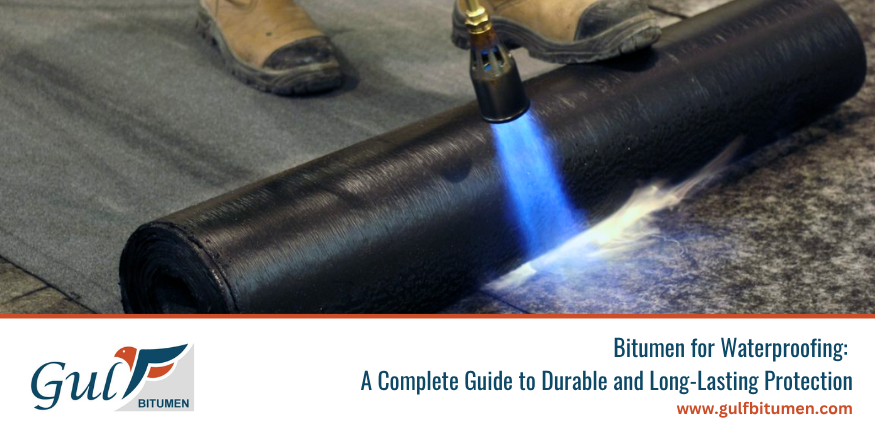
Water damage is one of the biggest threats to the durability and safety of residential, commercial, and industrial structures. Persistent moisture can lead to roof leaks, damp walls, foundation cracks, concrete deterioration, corrosion of steel reinforcement, and costly repairs.
Investing in a reliable waterproofing system is essential to protect buildings from water infiltration and extend their service life. Among the available solutions, bitumen for waterproofing remains one of the most trusted choices due to its exceptional water resistance, flexibility, strong adhesion, and long-lasting performance.
Modern innovations such as cold mix bitumen emulsion and cold emulsion bitumen have further improved application efficiency by offering safer, easier, and more environmentally friendly alternatives to conventional hot-applied systems.
This guide covers the benefits, types, applications, installation process, and maintenance of bitumen waterproofing, helping you understand how to choose the right solution for durable, long-lasting protection against moisture damage.
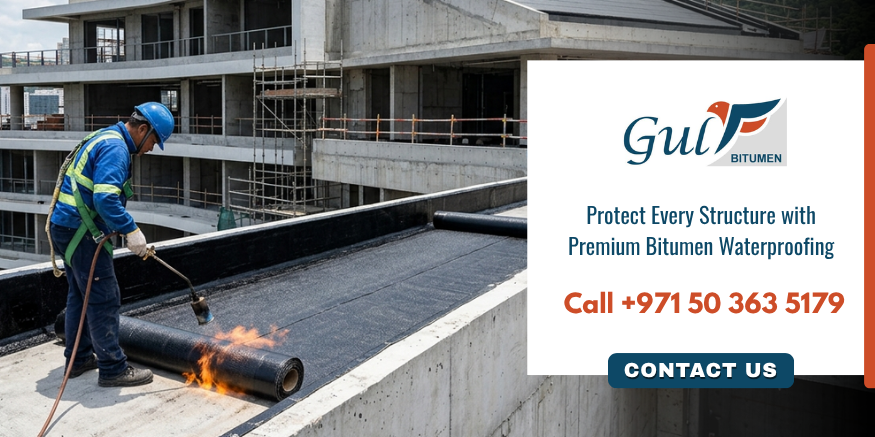
What Is Bitumen for Waterproofing?
Bitumen is a highly viscous petroleum-based material that acts as a waterproof barrier when applied to construction surfaces. Its natural impermeability prevents water from penetrating concrete, masonry, metal, timber, and other building materials.
Unlike rigid waterproofing systems, bitumen remains flexible after curing, allowing it to accommodate slight structural movement caused by temperature fluctuations, settlement, or vibration without cracking.
Today, bitumen for waterproofing is available in multiple forms to suit different project requirements, including:
- Liquid bitumen coatings
- Torch-applied membranes
- Self-adhesive membranes
- Polymer-modified bitumen sheets
- Protective primers
- Cold mix bitumen emulsion
- Cold emulsion bitumen
Each system is designed to provide dependable moisture protection while meeting the specific needs of residential, commercial, industrial, and infrastructure projects.
Why Waterproofing Matters for Every Structure
Water may seem harmless, but prolonged moisture exposure can gradually damage even the strongest construction materials. Effective waterproofing protects structures against a range of issues that develop over time due to water infiltration.
Without adequate waterproofing, buildings may experience:
- Foundation weakening
- Concrete deterioration
- Reinforcement corrosion
- Roof leakage
- Interior dampness
- Mould and mildew growth
- Paint blistering
- Plaster damage
- Structural cracks
- Higher maintenance costs
A well-designed waterproofing system prevents these issues, helping extend the life of buildings while maintaining safety and reducing future repair expenses.
Why Bitumen Remains One of the Most Trusted Waterproofing Materials
Despite the availability of newer waterproofing technologies, bitumen continues to be widely used because of its proven reliability across countless construction projects.
Excellent Waterproof Performance
Bitumen forms a seamless protective membrane that effectively blocks water penetration. Once cured, it creates an impermeable layer capable of resisting rainwater, groundwater, standing water, and moisture migration.
Strong Adhesion
Bitumen bonds exceptionally well with a wide range of construction materials, including:
- Concrete
- Asphalt
- Steel
- Brick
- Masonry
- Timber
This strong adhesion reduces the likelihood of water travelling beneath the waterproofing layer.
Flexibility
Buildings naturally expand and contract as temperatures change. Bitumen’s flexibility allows it to accommodate minor movement without splitting or losing its waterproofing properties.
Long Service Life
A professionally installed bitumen waterproofing system can provide decades of reliable protection with relatively low maintenance requirements.
Cost-Effective Solution
Bitumen offers an excellent balance between performance and affordability, making it suitable for projects ranging from residential homes to large-scale infrastructure developments.
How Bitumen Waterproofing Works
The effectiveness of bitumen waterproofing lies in its ability to create a continuous, water-resistant membrane.
When applied to a properly prepared surface, bitumen fills microscopic pores, bonds tightly with the substrate, and cures into a protective layer that prevents water penetration. Because the membrane remains slightly elastic, it can withstand minor structural movement without cracking.
This combination of waterproofing and flexibility makes bitumen suitable for structures exposed to changing weather conditions, thermal expansion, and constant moisture.
Types of Bitumen Waterproofing Systems
Choosing the right waterproofing system depends on the structure, environmental conditions, and project requirements.
Bitumen Waterproofing Membranes
Bitumen membranes are factory-manufactured sheets reinforced with polyester or fibreglass for improved strength and durability.
Common applications include:
- Flat roofs
- Basement walls
- Foundation slabs
- Bridge decks
- Underground structures
These membranes provide consistent thickness, high tensile strength, and excellent waterproof performance.
Modified Bitumen Membranes
Modified bitumen contains polymer additives that enhance flexibility and weather resistance.
Benefits include:
- Greater elasticity
- Better crack resistance
- Improved UV stability
- Longer lifespan
- Superior performance under extreme temperatures
Modified membranes are commonly specified for demanding construction environments.
Liquid Bitumen Coatings
Liquid coatings create seamless waterproof layers that conform easily to irregular shapes and detailed surfaces.
Typical applications include:
- Retaining walls
- Foundations
- Water tanks
- Pipe protection
- Industrial equipment
- Concrete structures
Cold Mix Bitumen Emulsion
Cold mix bitumen emulsion is a water-based waterproofing material that can be applied without heating.
Its growing popularity is due to several practical advantages:
- Safer application without open flames
- Reduced equipment requirements
- Lower energy consumption
- Faster project completion
- Excellent adhesion
- Easier handling on site
Because it does not require heating, cold mix bitumen emulsion is widely used in maintenance work, repairs, roof waterproofing, retaining walls, and infrastructure projects.
Cold Emulsion Bitumen
Cold emulsion bitumen combines bitumen with water and emulsifying agents to create a stable product that spreads easily across construction surfaces.
Key advantages include:
- Environmentally responsible application
- Lower emissions during installation
- Consistent coverage
- Strong bonding performance
- Reduced labour requirements
- Improved site safety
Many contractors now prefer cold emulsion bitumen because it offers reliable waterproofing while simplifying the application process.
Applications of Bitumen Waterproofing
One of the biggest advantages of bitumen waterproofing is its versatility across different construction sectors.
Roof Waterproofing
Roofs remain exposed to continuous weather conditions throughout their service life.
Bitumen waterproofing protects roofs against:
- Rainwater
- UV exposure
- Ponding water
- Thermal expansion
- Surface cracking
Applications include residential buildings, warehouses, commercial facilities, and industrial roofs.
Basement Waterproofing
Groundwater pressure makes basements especially vulnerable to water infiltration.
Bitumen waterproofing protects:
- Basement walls
- Foundation slabs
- Underground parking
- Utility rooms
This prevents dampness, mould growth, and structural deterioration.
Foundation Waterproofing
Foundations remain in permanent contact with soil moisture.
Bitumen coatings protect foundations from:
- Water seepage
- Soil moisture
- Hydrostatic pressure
- Reinforcement corrosion
Protecting foundations significantly extends the lifespan of buildings.
Bridge Construction
Bridge decks require durable waterproofing systems capable of resisting weather and traffic loads.
Bitumen waterproofing helps prevent:
- Concrete deterioration
- Water penetration
- Freeze-thaw damage
- Reinforcement corrosion
Tunnel Waterproofing
Underground tunnels require waterproof systems capable of withstanding continuous groundwater exposure.
Bitumen membranes provide reliable protection against seepage while maintaining long-term durability.
Industrial Facilities
Factories and processing plants frequently utilise bitumen waterproofing to protect:
- Storage tanks
- Pipework
- Utility buildings
- Concrete floors
- Equipment foundations
Water Retaining Structures
Bitumen waterproofing is widely used for:
- Reservoirs
- Irrigation channels
- Water tanks
- Drainage systems
Its waterproof barrier helps minimise leakage and improve structural durability.
Advantages of Cold-Applied Bitumen Solutions
The construction industry increasingly favours cold-applied waterproofing materials because they improve safety, efficiency, and sustainability.
Improved Safety
Unlike hot-applied bitumen, cold products eliminate fire hazards associated with heating equipment.
Easier Application
Both cold mix bitumen emulsion and cold emulsion bitumen can often be applied using simple tools, reducing installation complexity.
Faster Project Completion
Without heating requirements, contractors can complete waterproofing work more efficiently.
Lower Environmental Impact
Water-based emulsions reduce fuel consumption and emissions compared to traditional hot bitumen systems.
Choosing the Right Bitumen Waterproofing Solution
Selecting the most suitable waterproofing system depends on several factors.
Climate
Consider:
- Annual rainfall
- Temperature range
- UV exposure
- Humidity
- Freeze-thaw conditions
Surface Material
Different waterproofing products are formulated to perform best on specific substrates such as concrete, asphalt, brick, steel, timber, and masonry.
Structural Movement
Buildings experiencing vibration or expansion require flexible waterproofing systems.
Traffic Exposure
Surfaces subjected to pedestrian or vehicle traffic may require reinforced waterproofing membranes.
Project Size
Large infrastructure projects often benefit from membrane systems, while smaller repairs may use liquid coatings or emulsions.
Surface Preparation: The Foundation of Long-Lasting Waterproofing
Proper surface preparation is a critical step in achieving a durable and effective waterproofing system. Even the best waterproofing materials can fail if the substrate is not clean, sound, and ready for application.
Preparing the surface ensures better adhesion, uniform coverage, and long-term protection against moisture.
Key Surface Preparation Steps
Before applying waterproofing, make sure to:
- Remove dust, dirt, and loose debris
- Clean away oil, grease, and contaminants
- Repair cracks and damaged areas
- Fill surface voids and uneven sections
- Ensure proper drainage to prevent water pooling
- Apply a suitable primer where recommended
A well-prepared surface enhances bonding, reduces the risk of premature failure, and helps maximise the lifespan of the waterproofing system.
Best Practices for Installing Bitumen Waterproofing
Successful waterproofing depends not only on the quality of the material but also on correct installation techniques. Following industry best practices helps create a durable waterproof barrier, improves adhesion, and reduces the risk of leaks or premature failure.
Proper planning and attention to detail at every stage ensure long-lasting protection for the structure.
Inspect the Surface
Carefully examine the substrate for structural defects, moisture, dirt, contamination, and existing damage before beginning the application.
Prepare the Substrate
Clean the surface thoroughly and repair cracks, holes, or uneven areas to create a stable base for waterproofing.
Apply Primer
Where recommended, apply a compatible primer to improve adhesion between the substrate and the waterproofing material.
Install Waterproofing
Apply membranes, coatings, or emulsions evenly according to the manufacturer’s guidelines.
Seal Critical Areas
Pay special attention to:
- Corners
- Expansion joints
- Pipe penetrations
- Wall-floor junctions
Allow Proper Curing
Allow sufficient curing time before exposing the waterproofed surface to moisture, traffic, or heavy loads to ensure maximum performance.
Maintaining Bitumen Waterproofing Systems
Regular maintenance is essential to ensure bitumen waterproofing continues to protect structures from moisture damage.
Periodic inspections help identify minor issues before they develop into costly repairs, improving the overall lifespan and performance of the waterproofing system.
Recommended Maintenance Practices
To keep your waterproofing system in optimal condition:
- Conduct annual inspections for signs of wear or damage
- Clean drainage systems and roof outlets regularly
- Remove accumulated debris that may trap moisture
- Repair small cracks and damaged areas immediately
- Recoat ageing or weathered surfaces when required
A proactive maintenance routine preserves waterproof performance, minimises repair costs, and helps ensure reliable, long-lasting protection.
Common Waterproofing Mistakes to Avoid
Avoiding common installation mistakes is essential for achieving durable and long-lasting waterproofing performance. Even high-quality materials can fail prematurely if they are applied incorrectly or without following recommended practices.
Mistakes That Can Affect Waterproofing Performance
Watch out for these common issues:
- Poor surface preparation before application
- Inadequate membrane overlap or joint sealing
- Applying waterproofing during unsuitable weather conditions
- Ignoring manufacturer application guidelines
- Using insufficient coating thickness
- Failing to seal pipes, joints, and penetrations properly
- Skipping routine inspections and maintenance
Professional installation, combined with regular maintenance, helps maximise waterproofing performance and extends the service life of the protected structure.
Why Modern Construction Continues to Choose Bitumen
Bitumen remains one of the most trusted waterproofing materials because it offers a proven combination of durability, flexibility, and long-term moisture protection.
Its ability to perform reliably in diverse environmental conditions makes it a preferred choice for modern construction and infrastructure projects.
Key Reasons for Its Continued Popularity
Modern bitumen solutions provide several advantages, including:
- Excellent resistance to water and moisture infiltration
- Strong adhesion to concrete, metal, and masonry surfaces
- Improved application with cold mix bitumen emulsion and cold emulsion bitumen
- Enhanced worker safety through cold-applied technologies
- Long service life with minimal maintenance requirements
- Suitable for residential, commercial, industrial, and infrastructure applications
These qualities make bitumen a dependable waterproofing solution for projects requiring durable protection and long-lasting structural performance.
Build Long-Lasting Protection with the Right Waterproofing Solution
Choosing the right waterproofing system is essential for protecting structures from moisture damage, reducing maintenance costs, and extending their lifespan.
Bitumen for waterproofing remains a dependable choice thanks to its superior water resistance, flexibility, durability, and strong adhesion.
Modern solutions like cold mix bitumen emulsion and cold emulsion bitumen further enhance application efficiency while supporting safer and more sustainable construction practices.
Whether for roofs, foundations, basements, or infrastructure projects, quality bitumen products deliver reliable long-term performance. Gulf Bitumen offers premium waterproofing solutions designed to meet diverse construction needs.
Contact our team today to find the right bitumen solution for your next project.