
Infrastructure projects rely heavily on selecting the right construction materials, and bitumen remains one of the most critical components in road construction, paving, and various industrial applications.
Among the different classifications available in the market, penetration grade bitumen continues to be one of the most widely used because of its versatility, performance, and suitability for different climate conditions.
Choosing the correct grade is essential for ensuring pavement durability, resistance to deformation, and long-term project performance.
Whether the project involves highways, airports, urban roads, industrial facilities, or large-scale infrastructure developments, understanding the characteristics of each grade helps engineers and contractors make informed decisions.
This guide explains the various grades of penetration bitumen, how they are tested, where they are used, and what factors should be considered before selecting the ideal grade for a specific project.

Understanding Penetration Grade Bitumen
Penetration grade bitumen is classified according to its hardness or softness. The grading system is based on the results obtained from the penetration test of bitumen, which measures the depth that a standard needle penetrates into a bitumen sample under controlled conditions.
The penetration value provides an indication of the material’s consistency. Lower penetration values indicate harder bitumen, while higher values represent softer grades.
Because climate conditions, traffic loads, and pavement design vary from project to project, different penetration grades have been developed to meet specific engineering requirements.
The popularity of penetration grade bitumen stems from its:
- Reliable performance
- Consistent quality
- Broad range of applications
- Adaptability to different environments
- Cost-effective road construction solutions
Why Penetration Grading Matters
Selecting the wrong grade can significantly affect pavement performance.
If the bitumen is too soft:
- Rutting may occur during hot weather
- Surface deformation can increase
- Heavy traffic may accelerate damage
If the bitumen is too hard:
- Cracking becomes more likely
- Flexibility decreases
- Pavement lifespan may be reduced in colder conditions
Proper grade selection helps achieve:
- Improved durability
- Enhanced load-bearing capacity
- Better temperature resistance
- Lower maintenance costs
- Extended pavement service life
This is why contractors and consultants place considerable importance on understanding the properties of each grade before procurement.
The Penetration Test of Bitumen Explained
The grading system is based on the internationally recognized penetration test of bitumen.
During testing:
- A bitumen sample is prepared under controlled conditions.
- A standard needle is positioned above the sample.
- A specific load is applied.
- The needle is allowed to penetrate the sample for a fixed duration.
- The penetration depth is measured.
The result is expressed in tenths of a millimeter.
For example:
- Grade 40/50 allows penetration between 40 and 50 units.
- Grade 60/70 allows penetration between 60 and 70 units.
- Grade 80/100 allows penetration between 80 and 100 units.
Higher numbers indicate softer material.
Many engineers refer to a bitumen penetration test diagram when explaining testing procedures and interpreting results. A bitumen penetration test diagram visually illustrates the needle apparatus, sample container, loading mechanism, and penetration depth measurement process.
Understanding a bitumen penetration test diagram helps project stakeholders better evaluate material specifications and quality control procedures.
Common Penetration Grade Bitumen Types
Several grades are commonly used throughout the construction industry.
Penetration Grade 30/40
This is considered a relatively hard grade.
Key Characteristics
- High resistance to deformation
- Excellent stability under heavy traffic
- Suitable for hot climates
- Strong load-bearing performance
Typical Applications
- Airport runways
- Expressways
- Industrial pavements
- High-traffic roads
The hardness of this grade helps reduce rutting and surface damage in demanding environments.
Penetration Grade 40/50
Another hard grade commonly selected for heavily loaded pavements.
Advantages
- Improved structural stability
- Excellent resistance to wheel tracking
- Strong performance under high temperatures
Common Uses
- Major highways
- Freight corridors
- Urban arterial roads
- Port infrastructure
This grade is often chosen where long-term pavement durability is a primary concern.
Penetration Grade 60/70
One of the most widely used grades worldwide.
Features
- Balanced flexibility and hardness
- Good workability
- Adaptable to various climates
- Reliable pavement performance
Applications
- National highways
- Municipal roads
- Residential streets
- General paving projects
Many contractors consider this grade the industry standard due to its versatility.
Penetration Grade 80/100
This softer grade performs well in regions requiring greater flexibility.
Benefits
- Enhanced crack resistance
- Improved flexibility
- Suitable for moderate temperatures
Applications
- Secondary roads
- Urban streets
- Rural infrastructure
- Maintenance projects
Its softer characteristics help absorb stresses caused by environmental changes.
Penetration Grade 100/120
Designed for projects where flexibility is particularly important.
Common Uses
- Low-volume roads
- Surface treatments
- Specialized paving applications
This grade performs well in environments where pavement movement is expected.
Factors Affecting Grade Selection
Choosing the right penetration bitumen requires careful evaluation of several factors.
Climate Conditions
Temperature plays a major role in bitumen performance.
Hot Regions
Harder grades are typically preferred because they:
- Resist softening
- Reduce rutting
- Maintain structural integrity
Moderate Regions
Medium grades often provide the best balance between flexibility and stability.
Cooler Regions
Softer grades may offer better crack resistance and improved flexibility.
Traffic Volume
Traffic loading directly influences grade selection.
High-Traffic Roads
Require:
- Greater stiffness
- Improved deformation resistance
- Enhanced durability
Low-Traffic Roads
May benefit from softer grades that provide greater flexibility.
Pavement Design
Road structure, layer thickness, and aggregate selection all affect performance.
Engineers must evaluate:
- Base course design
- Surface course requirements
- Expected service life
- Maintenance schedules
Project Budget
Material selection often influences project economics.
While project teams naturally monitor bitumen price, selecting a grade solely based on cost can create long-term maintenance issues.
Instead, decision-makers should focus on lifecycle value rather than short-term savings.
Understanding the Bitumen Penetration Test Diagram
The bitumen penetration test diagram plays an important role in quality control and material evaluation within laboratories and construction industries. It provides a visual representation of the testing setup used to determine the consistency and hardness of bitumen.
Engineers, technicians, and inspectors commonly use this reference during training, testing procedures, and material inspections to ensure standardized practices are followed.
Main Components of a Bitumen Penetration Test Diagram
A standard bitumen penetration test diagram generally includes the following elements:
- Needle assembly used for penetration measurement
- Loading weights that apply the required pressure
- Sample container holding the bitumen specimen
- Penetration scale for recording depth readings
- Temperature-controlled bath to maintain testing conditions
Importance in Quality Assurance
Reviewing a bitumen penetration test diagram helps ensure testing accuracy and compliance with industry standards. It also supports better understanding among contractors, consultants, and suppliers during project discussions.
Key advantages include:
- Improved testing consistency
- Better interpretation of laboratory results
- Enhanced communication between project stakeholders
- Support for material compliance documentation
Since test accuracy directly affects grade classification, understanding these diagrams remains essential for reliable quality control processes.
Quality Control and Testing Procedures
Maintaining consistent bitumen quality is essential for ensuring long-term pavement performance and reliability in construction projects.
While the penetration test of bitumen is widely used to determine hardness and consistency, additional testing procedures are equally important for evaluating various performance characteristics.
These tests help engineers and contractors confirm that the material meets required specifications and project standards.
Important Bitumen Quality Tests
Several laboratory tests are conducted to assess different material properties:
Softening Point Test – Determines the temperature at which bitumen begins to soften under heat exposure.
Ductility Test – Measures the material’s flexibility and ability to stretch without breaking.
Flash Point Test – Identifies the temperature at which bitumen can safely be heated during handling and application.
Specific Gravity Test – Evaluates density characteristics and material composition.
Viscosity Testing – Measures flow behavior and workability at different temperatures.
Benefits of Comprehensive Testing
These quality control procedures provide several advantages:
- Improved material consistency
- Enhanced pavement durability
- Better temperature performance
- Greater safety during handling and application
- Compliance with industry standards
Together, these testing methods provide a complete understanding of bitumen performance and support successful infrastructure development.
Applications Across Industries
Penetration grade bitumen offers durability, flexibility, and weather resistance, making it suitable for diverse infrastructure and industrial applications.
Major Industry Applications
Penetration grade bitumen is commonly used in the following areas:
Highway Construction – Creates durable road surfaces designed to withstand continuous traffic loads.
Airport Infrastructure – Provides strength and stability for runways and taxiways exposed to heavy aircraft movement.
Bridge Deck Protection – Improves waterproofing and enhances structural longevity.
Industrial Facilities – Used in logistics hubs, parking areas, and industrial paving applications.
Infrastructure Development – Supports large transportation and urban development projects.
Key Benefits Across Sectors
Its broad application range offers:
- Long-term durability
- Reliable performance
- Enhanced structural protection
- Adaptability for different project requirements
This versatility continues to increase demand across global construction industries.
Flexible Packaging and Transportation Solutions for Every Project
Selecting the right packaging and transportation method is essential for maintaining bitumen quality and ensuring efficient project execution.
Available Packaging Options
Contractors can choose from several delivery formats, including:
- Bulk supply for large-scale, high-volume projects
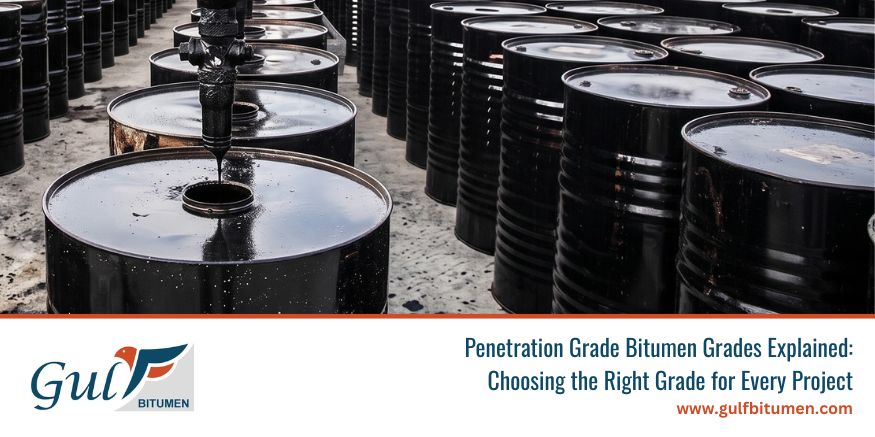
- Bitumen drums for convenient storage and transportation
- Jumbo bags for flexible handling requirements
- Bitumen tank containers for international shipping and temporary storage
Benefits of Choosing the Right Solution
The appropriate packaging method helps:
- Protect product quality during transit
- Improve storage efficiency on-site
- Reduce handling and logistics costs
- Ensure timely and reliable delivery
By matching packaging solutions to project requirements, companies can streamline operations, enhance supply chain performance
Key Factors Influencing Bitumen Pricing
Understanding market dynamics is essential when planning construction and infrastructure projects.
The bitumen price can fluctuate due to several economic and industry-specific factors, making it important for contractors and procurement teams to stay informed before making purchasing decisions.
Major Factors Affecting Bitumen Prices
Several elements contribute to changes in market pricing, including:
- Crude oil market fluctuations
- Refinery production capacity and output
- Transportation and freight expenses
- Supply chain efficiency and logistics
- Seasonal construction demand
- Regional supply and availability
Since bitumen is derived from crude oil, changes in global energy markets can have a direct impact on the overall bitumen price. In addition, disruptions in production or transportation can create supply constraints that influence market rates.
Importance of Monitoring Regional Pricing
Many international buyers closely track bitumen price in UAE due to the country’s role as a major supplier to markets across the Middle East, Africa, and Asia. Variations in shipping costs, refinery operations, and large-scale infrastructure developments can all affect bitumen price in UAE throughout the year.
When selecting suppliers, contractors should consider:
- Product quality and consistency
- Supply reliability
- Delivery capabilities
- Long-term procurement requirements
- Competitive bitumen price in UAE offerings
Regularly monitoring market conditions helps organizations make informed purchasing decisions, optimize project budgets, and secure stable supply agreements for future infrastructure developments.
Why Contractors Continue Choosing Penetration Grades
The continued demand for penetration grades in construction and infrastructure projects is driven by their reliable performance and adaptability across different applications.
Contractors and engineers prefer these grades because they offer consistent quality and can meet diverse project requirements.
Key Reasons for Their Popularity
Several factors make penetration bitumen a preferred material choice:
Proven Performance – Successfully used in road and infrastructure projects for decades worldwide.
Wide Availability – Produced and supplied across multiple regional and international markets.
Cost Efficiency – Offers competitive procurement and long-term value.
Engineering Flexibility – Suitable for highways, urban roads, airport runways, and industrial paving.
Established Standards – Standardized testing and grading methods simplify selection and quality assessment.
Long-Term Project Benefits
The versatility of penetration grades helps contractors achieve:
- Better pavement durability
- Consistent material performance
- Simplified project planning
- Reliable construction outcomes
These advantages continue to make penetration grades a practical solution for modern infrastructure development projects.
Choose the Right Penetration Grade Bitumen for Long-Term Success
Selecting the right penetration grade bitumen is essential for achieving durable, reliable, and cost-effective infrastructure.
By understanding the penetration test of bitumen, reviewing a bitumen penetration test diagram, and evaluating climate and traffic conditions, project teams can choose the most suitable penetration bitumen for their requirements.
While factors such as bitumen price in UAE influence procurement decisions, quality and performance should remain the priority. At Gulf Bitumen, we supply high-quality bitumen products designed to meet diverse project demands.
Contact Gulf Bitumen today to discuss your requirements and find the ideal bitumen solution for your next construction or road development project.