
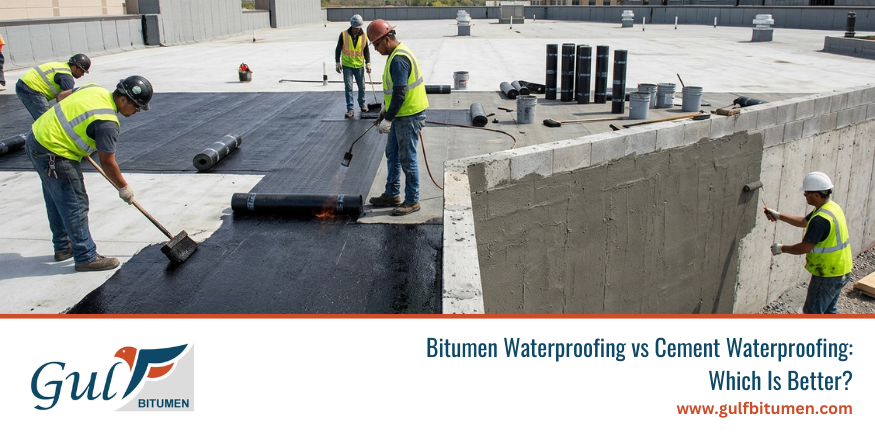
Water damage remains one of the leading causes of structural deterioration in buildings, roads, industrial facilities, and infrastructure projects. Continuous moisture penetration can weaken surfaces, create cracks, reduce durability, and increase maintenance costs over time.
Selecting the right waterproofing system is therefore essential for ensuring long-term structural performance and protection. Among the various solutions available, bitumen waterproofing and cement waterproofing are two widely used methods in modern construction.
Both are designed to protect structures against water intrusion, but they differ in composition, flexibility, application process, and overall durability. Solutions using bitumen for waterproofing are increasingly preferred in demanding environments due to their ability to provide flexible and long-lasting protection.
Companies such as Gulf Bitumen support construction requirements with advanced products, including bituminous primer for waterproofing and water based bitumen primer solutions, helping project owners address concerns like is bitumen primer waterproof while ensuring dependable moisture protection.
Understanding Waterproofing in Construction
Waterproofing refers to the process of creating a protective layer that prevents water penetration into structures. Buildings constantly face exposure to rain, humidity, groundwater, and environmental moisture. Without proper waterproofing systems, water can seep through walls, foundations, roofs, and surfaces.
Poor waterproofing can result in:
- Structural weakening
- Concrete deterioration
- Mold and mildew growth
- Corrosion of reinforcement steel
- Interior damage
- Reduced building lifespan
- Increased maintenance expenses
The primary objective of any waterproofing system is to preserve structural integrity while extending the life of construction materials.
Different materials are used to achieve this goal, but bitumen-based and cement-based systems remain among the most established methods in construction projects.
What Is Bitumen Waterproofing?
Bitumen waterproofing is a protective system that uses bitumen-based materials to create a strong moisture-resistant barrier on surfaces. Bitumen is a petroleum-derived material known for its adhesive qualities, flexibility, and resistance to water penetration.
Bitumen systems can be applied in multiple forms, including:
- Bituminous coatings
- Bitumen membranes
- Modified bitumen sheets
- Emulsion systems
- Primers
- Protective sealants
One of the major advantages of bitumen for waterproofing is its ability to create a seamless protective layer capable of adapting to surface movement and changing environmental conditions.
Bitumen waterproofing is commonly used in:
- Roof systems
- Foundations
- Basements
- Bridges
- Tunnels
- Wet areas
- Industrial structures
- Underground construction
Its widespread adoption comes from its performance under varying weather conditions and its durability in demanding environments.
What Is Cement Waterproofing?
Cement waterproofing involves applying cement-based compounds mixed with additives that reduce water penetration. These systems are commonly used due to their simplicity and ease of application.
Cement waterproofing materials typically include:
- Cement
- Sand
- Polymer additives
- Chemical modifiers
The mixture creates a rigid waterproof layer that bonds directly to concrete and masonry surfaces.
Typical applications include:
- Bathrooms
- Water tanks
- Internal walls
- Swimming pools
- Concrete surfaces
- Small residential projects
Because cement waterproofing relies heavily on cementitious materials, it tends to perform best in areas with limited structural movement.
Key Differences Between Bitumen Waterproofing and Cement Waterproofing
Understanding the distinctions between these systems provides a clearer picture of which option suits particular projects.
- Material Composition
Bitumen waterproofing consists primarily of petroleum-based compounds engineered for moisture resistance and flexibility.
Cement waterproofing relies on cement and mineral-based ingredients with waterproofing additives.
This fundamental difference influences the overall performance characteristics of each system.
- Flexibility
Flexibility is critical because structures naturally expand and contract due to temperature changes and settlement.
Bitumen materials possess excellent flexibility and can tolerate movement without cracking.
Cement systems are relatively rigid and may develop cracks over time under structural stress.
In environments with temperature fluctuations or movement, bitumen for waterproofing generally offers stronger performance.
- Water Resistance
Both systems resist water penetration, but their methods differ.
Bitumen creates an external barrier that prevents moisture entry.
Cement waterproofing reduces permeability within the material itself.
Bitumen systems often provide more comprehensive protection against prolonged exposure to moisture.
- Adhesion Properties
Bitumen products exhibit strong adhesion to multiple surfaces, including:
- Concrete
- Metal
- Asphalt
- Masonry
Cement waterproofing adheres mainly to concrete and similar surfaces.
Greater versatility allows bitumen systems to be used in broader construction applications.
- Durability
Long-term durability depends on environmental exposure and maintenance requirements.
Bitumen waterproofing generally performs effectively in:
- Extreme temperatures
- High moisture exposure
- Industrial environments
- Underground structures
Cement waterproofing may require more frequent maintenance under demanding conditions.
- Installation Process
Cement waterproofing often involves straightforward application through brushes or trowels.
Bitumen systems can involve:
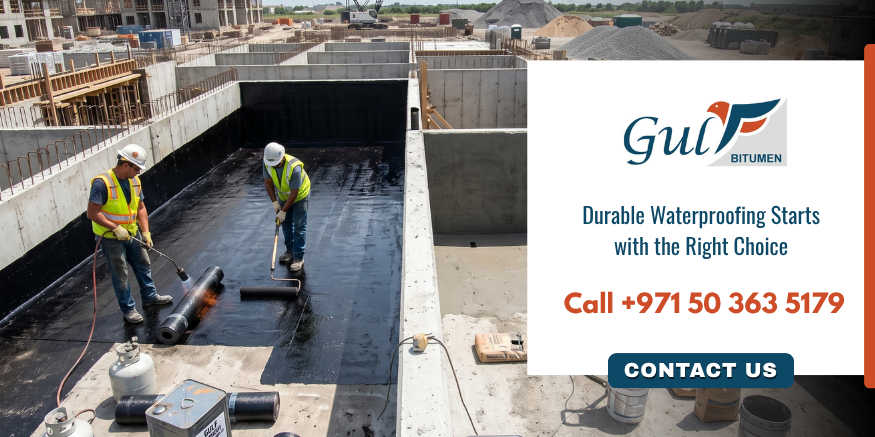
- Hot applications
- Cold applications
- Membrane installation
- Primer application
- Protective coatings
While installation methods can vary, the resulting protection levels are often stronger in complex environments.
Advantages of Bitumen Waterproofing
Bitumen systems continue to gain popularity because they provide multiple performance benefits.
Superior Moisture Protection
Bitumen forms a dense protective layer that effectively blocks water infiltration.
Its low permeability helps preserve structures even under continuous exposure to moisture.
High Flexibility
Construction materials naturally experience movement.
Bitumen accommodates:
- Expansion
- Contraction
- Vibrations
- Settlement
This flexibility significantly reduces cracking risks.
Excellent Durability
Properly applied bitumen systems can maintain effectiveness for extended periods.
They resist:
- Weather exposure
- Chemicals
- Moisture
- Temperature changes
Broad Application Range
Bitumen waterproofing works across numerous construction sectors, including:
- Residential construction
- Commercial projects
- Industrial facilities
- Infrastructure developments
Strong Surface Adhesion
Reliable adhesion ensures consistent protection across different substrates.
Many systems begin with a bituminous primer for waterproofing, which improves bonding between the substrate and waterproofing layers.
Proper surface preparation plays an important role in achieving long-term performance.
Advantages of Cement Waterproofing
Cement systems also provide benefits in specific situations.
Easy Application
Many cement products are relatively simple to apply.
They typically require basic equipment and straightforward procedures.
Good Compatibility With Concrete
Because concrete and cement share similar compositions, cement waterproofing bonds effectively with concrete surfaces.
Suitable for Internal Areas
Bathrooms, kitchens, and internal wet zones often benefit from cement-based systems.
Cost Efficiency for Small Projects
For limited residential applications, cement waterproofing can provide an economical solution.
Limitations of Bitumen Waterproofing
Despite its strengths, bitumen systems may have some considerations.
Skilled Installation Requirements
Certain applications require experienced professionals for proper installation.
Incorrect application can reduce effectiveness
Surface Preparation Needs
Surfaces must be clean and properly prepared before application.
Primers are frequently used to improve adhesion and system performance.
For example, a bituminous primer for waterproofing creates a prepared surface that allows subsequent waterproofing layers to bond effectively.
Environmental Considerations During Installation
Specific application methods may require controlled conditions to ensure proper performance.
Limitations of Cement Waterproofing
Although cement waterproofing is widely used in construction projects, it has certain limitations that can affect long-term performance, especially in demanding environments.
Key Challenges of Cement Waterproofing
- Limited Flexibility
Cement-based materials are rigid in nature and may struggle to accommodate structural movement or expansion. - Reduced Durability in Harsh Conditions
Continuous exposure to moisture, changing temperatures, and environmental stress can gradually reduce performance over time. - Potential for Surface Cracks
As buildings settle or undergo thermal expansion and contraction, cement layers may develop cracks that allow water penetration.
Understanding these limitations helps project owners select a waterproofing solution that aligns with durability and performance requirements.
The Role of Primers in Waterproofing Systems
Primers play an important role in improving adhesion and ensuring waterproofing effectiveness.
Bitumen systems frequently use primer products before applying membranes or coatings.
Primer layers help by:
- Sealing porous surfaces
- Increasing adhesion
- Reducing dust
- Improving coverage consistency
- Supporting longer-lasting performance
Questions often arise regarding is bitumen primer waterproof when evaluating system performance.
Bitumen primer itself contributes moisture resistance and surface preparation, but it generally functions as part of a complete waterproofing system rather than serving as the sole protective layer.
Its main purpose is enhancing the overall waterproofing assembly.
Understanding Water-Based Bitumen Solutions
Modern construction projects increasingly prioritize practical and efficient materials.
A water based bitumen primer represents an alternative formulation designed for easier application and surface preparation.
These products are often valued because they provide:
- Reduced odor
- Easier handling
- Improved application convenience
- Effective substrate preparation
- Strong adhesion characteristics
A water based bitumen primer may be used on concrete and masonry surfaces before additional waterproofing layers are installed.
Such formulations help create a stable foundation for membrane systems.
Applications Where Bitumen Waterproofing Performs Better
Bitumen systems typically excel in demanding environments.
Roofing Systems
Roofs face constant exposure to:
- Rain
- Heat
- UV radiation
- Temperature fluctuations
Flexible bitumen materials adapt effectively to these conditions.
Basements
Basements are particularly vulnerable to groundwater pressure and moisture intrusion.
Bitumen systems create reliable external protection.
Bridges and Infrastructure
Large infrastructure projects require waterproofing materials capable of handling movement and weather exposure.
Bitumen systems often satisfy these requirements.
Underground Structures
Subterranean applications demand strong moisture barriers because exposure to groundwater remains constant.
Bitumen for waterproofing offers reliable performance under such conditions.
Applications Where Cement Waterproofing Performs Better
Certain environments benefit from cement systems.
Bathrooms
Bathrooms typically involve internal waterproofing with relatively low structural movement.
Water Storage Structures
Water tanks and similar installations frequently use cement-based coatings.
Swimming Pools
Pool surfaces often rely on cement waterproofing systems because of compatibility with concrete construction.
Small Residential Projects
Projects with straightforward requirements may choose cement waterproofing due to installation simplicity.
Comparing Maintenance Requirements
Maintenance plays an important role in lifecycle cost calculations.
Bitumen waterproofing generally requires:
- Periodic inspections
- Surface checks
- Repair of localized damage if necessary
Cement systems may require:
- Crack repairs
- Reapplication
- Surface restoration
Over time, flexible systems often reduce maintenance frequency because they resist movement-related failures.
Environmental Exposure Considerations
Construction environments vary significantly.
Factors affecting waterproofing performance include:
Temperature Changes
Materials expand and contract under changing temperatures.
Flexible systems tolerate these changes more effectively.
UV Exposure
Outdoor systems face sunlight exposure throughout the year.
Proper bitumen formulations provide strong weather resistance.
Water Pressure
Underground structures may experience hydrostatic pressure.
Bitumen barriers can provide improved resistance in such situations.
Chemical Exposure
Industrial environments often expose structures to chemicals and contaminants.
Bitumen systems may demonstrate greater resilience depending on formulation.
Cost Versus Long-Term Value
Initial project costs often influence material selection.
Cement waterproofing can appear attractive due to lower upfront costs for small projects.
However, evaluating only installation expenses may not present the full picture.
Long-term value should include:
- Service life
- Maintenance requirements
- Repair costs
- Durability
- Performance under environmental stress
Bitumen systems frequently provide stronger lifecycle value because of their durability and lower maintenance requirements.
Factors to Consider Before Choosing a Waterproofing Method
Every project requires careful evaluation.
Important considerations include:
Project Type
Different structures require different levels of protection.
Surface Conditions
Substrate characteristics influence material compatibility.
Moisture Exposure Level
Areas exposed to heavy moisture require stronger barriers.
Structural Movement
Movement potential affects material selection.
Budget Planning
Short-term and long-term costs should both be evaluated.
Environmental Conditions
Climate and exposure conditions impact system performance.
Which Waterproofing System Is Better?
There is no universal waterproofing solution because every project has unique structural and environmental requirements. The right choice depends on application type, exposure conditions, and expected long-term performance.
When Cement Waterproofing Works Best
Cement systems are commonly selected for:
- Small residential projects
- Bathrooms and internal wet areas
- Applications with limited structural movement
- Simple installation requirements
Why Bitumen Waterproofing Often Performs Better
For projects requiring enhanced protection, bitumen for waterproofing is frequently preferred because of:
- Greater flexibility and crack resistance
- Long-term moisture protection
- Better performance in roofs, basements, and foundations
- Stronger adhesion with bituminous primer for waterproofing
Questions like is bitumen primer waterproof are common, while modern solutions such as water based bitumen primer continue improving application efficiency and performance.
Build Long-Term Protection with Gulf Bitumen
Choosing the right waterproofing solution directly impacts the strength, durability, and lifespan of any structure.
While cement systems may suit basic applications, bitumen for waterproofing delivers dependable performance for demanding environments that require flexibility and long-lasting protection.
High-quality products such as bituminous primer for waterproofing help improve adhesion and overall system efficiency. If you’re wondering, is bitumen primer waterproof? It contributes to moisture resistance as part of a complete waterproofing system.
Gulf Bitumen offers advanced solutions, including water based bitumen primer products designed to support reliable protection across various construction and infrastructure projects.
Connect with Gulf Bitumen to explore durable waterproofing solutions.