
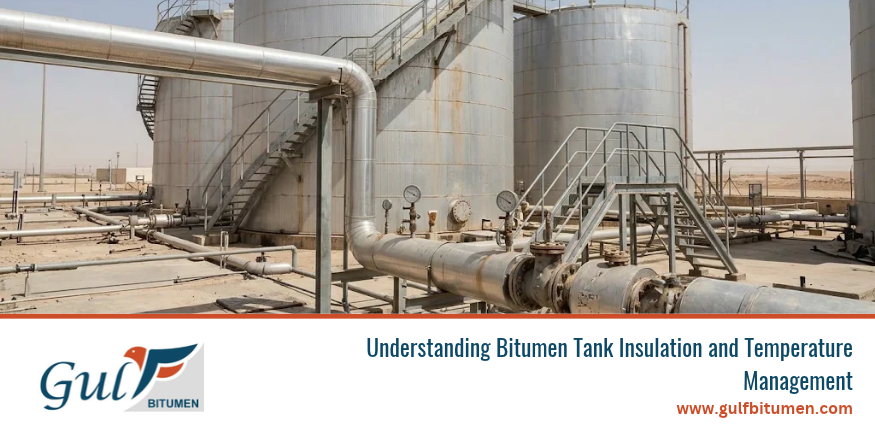
Bitumen requires suitable temperature conditions during storage and handling to maintain its workability and support smooth transfer between locations. Properly insulated bitumen tanks help reduce heat loss and maintain more stable temperatures, while an appropriate heating system provides additional temperature control when needed.
Without effective management, changes in temperature can affect the material’s viscosity and make handling more difficult. Regular monitoring and insulation maintenance are therefore important parts of storage operations. This blog explores insulation materials, heating systems, temperature monitoring, and practical maintenance considerations. For businesses sourcing bitumen, Gulf Bitumen offers a point of contact to discuss project requirements and available product options.

Why Is Temperature Control Important During Bitumen Storage?
Temperature control is important during bitumen storage because it affects how easily the material can be pumped, transferred, and handled. Bitumen becomes less viscous when heated and thicker as it cools. If the temperature drops too much, the material may become difficult to move through pipelines, creating challenges during storage and transfer.
Maintaining suitable temperatures helps keep bitumen workable and supports smoother operations. However, the required temperature range varies depending on the bitumen grade and its intended application. Regular temperature checks also help operators identify fluctuations and ensure that the stored material remains within the recommended limits.
Common Insulation Materials Used for Bitumen Tanks
Selecting suitable insulation materials is essential for reducing heat loss and maintaining temperature stability in a bitumen tank. Different materials offer varying levels of thermal resistance and durability, depending on the storage system.
- Mineral wool: Commonly used in industrial insulation because it provides thermal resistance and can withstand elevated operating temperatures.
- Glass wool: Offers insulating properties and is used in suitable industrial tank applications.
- Other insulation materials: Materials such as calcium silicate may also be considered, depending on system requirements.
- Temperature resistance: The selected material must withstand the tank’s operating temperature.
- Durability and moisture resistance: Insulation should resist environmental exposure and retain its performance.
- Installation requirements: Material selection and installation should follow engineering specifications and tank design considerations.
Understanding How Bitumen Tank Insulation Works
Bitumen tank insulation works by reducing the transfer of heat between the stored material and the surrounding environment. It creates a thermal barrier that helps slow down temperature changes and limit heat loss during storage.
- Reducing heat transfer: Insulation slows the movement of heat from the warmer tank interior to the cooler surroundings.
- Covering exposed surfaces: Insulating the tank walls, roof, and other exposed sections helps minimise heat loss.
- Supporting heating systems: Insulation works alongside heating equipment by reducing heat loss and helping maintain the required temperature.
- Improving temperature stability: A suitable insulation arrangement helps limit temperature fluctuations during storage.
- Meeting tank requirements: Insulation thickness and material selection depend on tank design, storage capacity, operating temperatures, and environmental conditions.
Heating Systems Used for Bitumen Temperature Management
Heating systems help maintain bitumen at temperatures suitable for storage and transfer. The choice depends on the tank design, material requirements, and the way the stored product will be used.
- Heating coils: Installed inside or around the tank, these transfer heat to the stored bitumen and help maintain the required temperature.
- Thermal oil systems: Heated oil circulates through coils or jackets, providing controlled heat in suitable installations.
- Electric heating: Electric elements may be used where appropriate for the tank size, insulation, and operating setup and conditions.
- Heat distribution: System design should support even heating and help avoid localised overheating.
- System selection: Tank capacity, bitumen grade, required operating temperature, and handling needs should guide the heating arrangement. Equipment should also meet relevant safety and engineering requirements.
Temperature Monitoring and Control Systems
Temperature monitoring helps operators check whether stored bitumen remains within the recommended range for its grade and intended use throughout storage. Reliable readings support timely operational adjustments daily.
- Temperature sensors: These measure conditions at selected points and provide information about changes inside the tank.
- Gauges and displays: Readings allow operators to check temperatures during routine storage and handling.
- Monitoring locations: Sensors should be positioned appropriately to give useful readings rather than relying on a single point where conditions may vary.
- Automatic controllers: These can regulate heating equipment by switching it on or off according to set temperature limits.
- Regular checks: Operators should review readings, identify unusual fluctuations, and follow product-specific operating limits and safety procedures.
Preventing Heat Loss During Bitumen Storage and Transfer
Reducing unnecessary heat loss helps maintain required bitumen temperatures and supports efficient storage and transfer. Insulation and regular checks contribute to this process.
- Tank insulation: Properly installed insulation around the tank helps slow heat transfer to the surrounding environment.
- Insulated pipework: Exposed pipes and transfer lines should also be insulated to limit cooling as bitumen moves.
- Protective cladding: Outer coverings should be maintained to protect insulation from moisture and physical damage.
- Transfer planning: Avoiding unnecessary delays and exposure during transfer can help reduce temperature changes.
- Connection checks: Inspect openings, valves, flanges, and joints for damaged coverings or gaps, and follow approved storage and transfer procedures.
Risks of Inadequate Heating and Excessive Temperatures
Poor temperature management affects bitumen handling and creates concerns. Insufficient heating and excessive temperatures should be avoided.
- Inadequate heating: As bitumen cools, its viscosity increases, making pumping and transfer more difficult.
- Handling difficulties: Highly viscous material may move slowly through pipes and place additional demands on pumping equipment.
- Overheating: Excessive temperatures can accelerate material ageing and affect its properties.
- Application suitability: Products used for bitumen primer waterproofing may have specific storage and handling instructions depending on their formulation. Operators should follow the manufacturer’s guidance to maintain suitable product conditions.
- Safe operation: Operators should follow product guidance, temperature limits, and safety procedures rather than applying one temperature to every grade.
Inspection and Maintenance of Bitumen Tank Insulation
Regular inspection helps identify insulation problems before they affect temperature management and storage operations. The following checks can help maintain the insulation system:
- Insulation surfaces: Check for cracks, gaps, loose sections, or visible physical damage.
- Outer cladding: Inspect protective coverings for corrosion, deterioration, or damaged joints.
- Moisture exposure: Look for water penetration, as moisture can reduce insulation effectiveness.
- Heating components: Check heating coils, connections, and related equipment for visible issues.
- Monitoring systems: Inspect temperature sensors, gauges, and control systems to ensure proper operation.
- Scheduled maintenance: Follow inspection procedures and arrange timely repairs or replacements when necessary.
Choosing Suitable Storage Conditions for Different Bitumen Applications
Different grades of bitumen come with specific temperature requirements for storage, which are determined by their unique composition, viscosity, and intended applications. It is essential to select the appropriate storage conditions based on the technical specifications provided for each product, rather than applying a one-size-fits-all temperature range.
For instance, bitumen waterproofing in construction projects requires meticulous handling and storage to preserve its essential properties. The temperature needs for this type of bitumen can vary significantly, depending on its particular formulation and product category.
Before storing or heating any bituminous material, operators should consult the bitumen manufacturer in UAE recommendations and relevant technical documentation. Doing so will provide them with crucial insights into the suitable temperature limits and proper handling procedures needed for their specific applications, ensuring the material performs effectively and safely.
Sourcing Bitumen Products from Gulf Bitumen
Selecting suitable bitumen products involves understanding their intended applications, storage conditions, and handling requirements. Construction companies and contractors should review product specifications to ensure the materials align with their project needs. Proper storage and temperature management are equally important for maintaining suitable material conditions throughout handling and use.
Contractors and project teams can contact Gulf Bitumen to enquire about suitable options, review relevant product information, and make informed decisions based on their construction and infrastructure requirements.