
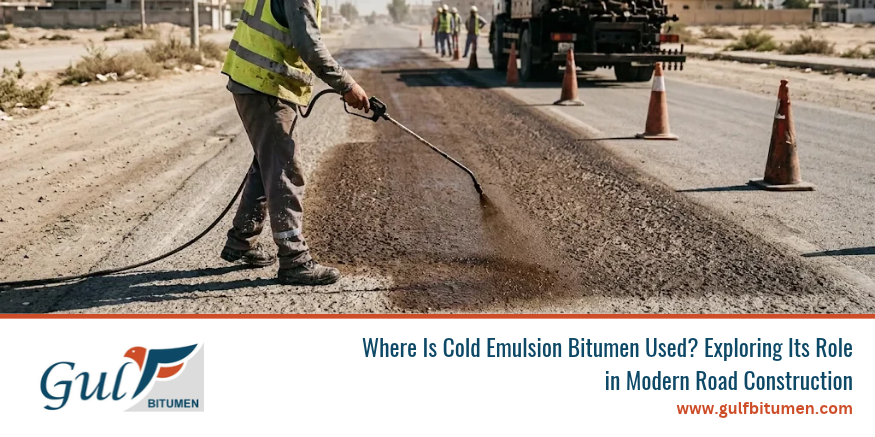
Bitumen plays an important role in road construction by binding aggregates together and helping create durable surfaces for everyday traffic. However, maintaining roads also requires materials suited to different weather conditions, project requirements, and repair needs. Cold emulsion bitumen is one such material, used in various road construction and maintenance applications.
Unlike conventional hot-mix processes, it can be applied without first heating the bitumen to high temperatures, making it suitable for certain types of work. Understanding where this material performs best helps contractors make informed choices. This blog explores its applications in road repairs, surface treatments, and other construction activities, along with key selection considerations.

What Is Cold Emulsion Bitumen and How Does It Work?
Cold emulsion bitumen is a mixture in which tiny bitumen droplets are dispersed throughout water with the help of an emulsifying agent. This composition allows the material to remain workable at normal temperatures before application, without requiring the bitumen to be heated to conventional hot-mix temperatures.
Once applied, the emulsion begins to break as water separates from the mixture and the bitumen droplets come together, forming a continuous binder film. Bitumen emulsions are generally classified as rapid-setting, medium-setting, or slow-setting, depending on how quickly this process occurs.
Each type serves different purposes: rapid-setting grades are used in suitable surface treatments, while medium- and slow-setting grades allow more working time for applications such as mixing with aggregates.
Cold Bitumen Emulsions Differ from Traditional Hot Mix Applications
Traditional hot-mix asphalt applications require bitumen and aggregates heated to specified temperatures before mixing and placement. This process involves specialised heating equipment and careful temperature control during preparation and transportation. In contrast, cold-applied emulsions can be handled and applied without heating the bitumen to similarly high temperatures.
This creates differences in material preparation, equipment requirements, and application methods. Cold mix bitumen emulsion is used for selected road maintenance and construction tasks where aggregates are combined with an appropriate emulsion. However, cold applications do not replace hot-mix methods in every situation. The suitable approach depends on pavement conditions, traffic demands, weather, and project specifications.
Benefits and Practical Considerations of Cold Emulsion Applications
Cold emulsion applications offer practical advantages for selected road construction and maintenance activities. Since they do not require the same high-temperature bitumen heating as conventional hot-mix processes, they can simplify certain preparation and application requirements. They are particularly useful for suitable patching, surface treatments, and other maintenance tasks. However, their performance depends on several practical factors:
- Curing time: The emulsion needs sufficient time to break and set.
- Weather and moisture: Temperature, rainfall, and surface moisture can affect application and setting.
- Traffic conditions: The repaired or treated surface may require time before opening to traffic.
- Material selection: Consulting experienced cold mix bitumen suppliers can help identify products suited to project specifications.
Cold Mix Bitumen Emulsion in Road Construction and Maintenance
Cold mix bitumen combines aggregates with a bitumen emulsion, allowing for preparation and placement without heating. It is used for road repairs, pothole patching, minor road construction and is suitable for low-volume roads.
The mixture’s performance relies on factors like aggregate grading, moisture content, and the compatibility of the aggregate with the emulsion. Proper mixing, placement, and compaction are crucial for achieving the desired surface condition. However, cold mix bitumen is not suitable for every project and should be evaluated based on intended use, traffic conditions, and engineering specifications.
Road Patching and Pothole Repairs
Cold mix bitumen emulsion can be used for repairing selected areas of damaged pavement. The process involves preparing the affected section, placing a suitable mixture, and compacting it to create a stable patch.
- Understanding road damage: Potholes and localised surface defects can develop due to water penetration, repeated traffic loads, and gradual pavement deterioration.
- Selecting the repair material: Suitable cold mix materials can be used for patching without requiring conventional hot-mix heating.
- Preparing the repair area: Loose debris, standing water, and unstable material should be removed to create a suitable surface.
- Applying and compacting: The mixture is placed into the damaged section and compacted appropriately to achieve a stable repair.
- Supporting maintenance: Cold patching can be practical where heating equipment or extensive roadwork is difficult to arrange.
Surface Dressing and Preventive Road Maintenance
Surface dressing is a road maintenance treatment that uses a bituminous binder and aggregate to renew suitable existing pavement surfaces. Bitumen emulsions can serve as the binder in this process.
- Binding the aggregate: A suitable emulsion helps hold the aggregate in place as it breaks and develops its binding properties.
- Addressing surface wear: Surface dressing can help manage minor pavement deterioration, restore surface texture, and improve aggregate retention.
- Supporting preventive maintenance: When applied to suitable roads, this treatment can help protect the existing surface and reduce further deterioration.
- Selecting suitable materials: The emulsion type and aggregate size should match the pavement condition and treatment requirements.
- Checking project conditions: Surface condition, traffic levels, weather, and application specifications should be considered before work begins.
Tack Coats and Bonding Between Asphalt Layers
A tack coat is a thin layer of bituminous material applied between existing pavement and a new asphalt layer. It helps create the bond needed to keep the layers working together.
- A suitable bitumen emulsion is commonly used to form this bonding layer.
- The existing pavement should be clean and free from loose debris before application.
- Proper bonding helps prevent movement or separation between pavement layers under traffic loads.
- The application rate should follow project specifications to provide adequate coverage without excessive binder.
- The emulsion should be allowed to break or set as required before the next asphalt layer is placed.
Prime Coats and Preparing Granular Road Bases
A prime coat is a bituminous treatment applied to a suitable untreated granular road base before placing subsequent pavement layers. It helps prepare the surface for the next construction stage.
- An emulsion can penetrate the upper portion of the granular base, depending on its properties and surface condition.
- It helps bind loose particles and prepare the surface for subsequent layers.
- The base should be properly prepared and free from loose material before application.
- The application rate must suit the base condition and specified material.
- Checking the base against project requirements helps ensure it is ready for further pavement construction.
The Importance of Reliable Bitumen Supply for Road Projects
Reliable material sourcing is an important part of planning and executing road construction projects. Contractors need bituminous products that meet the technical requirements of their intended applications and remain consistent across deliveries.
When evaluating bitumen suppliers in UAE, project teams should consider the following factors:
- Product specifications: Ensure supplied materials meet the required project grades and technical standards.
- Quality and handling: Consistent product quality, appropriate storage, and careful handling help maintain material condition.
- Supply planning: Dependable delivery arrangements help reduce material-related scheduling disruptions.
- Technical documentation: Product specifications and relevant technical information support informed purchasing and application decisions.
Sourcing Bitumen Products from Gulf Bitumen
Selecting suitable bituminous materials is an important part of planning road construction and maintenance projects. Different applications require materials with specific properties, making it essential for contractors and project teams to understand their requirements before making purchasing decisions. Factors such as the intended use, application method, road conditions, and relevant technical specifications should all be considered when evaluating available options.
Working with a reliable supply source can also support better material planning and project coordination. Buyers should review product specifications, handling requirements, and relevant technical documentation to determine whether a material is appropriate for the intended application. Clear communication about project needs can help narrow down suitable options and avoid selecting products that do not match the required construction work.
Whether a project involves road development, pavement maintenance, or other bitumen-related applications, understanding the material requirements is an important first step. Contact Gulf Bitumen to discuss your project needs, enquire about available product options, and identify suitable materials based on your application requirements.